
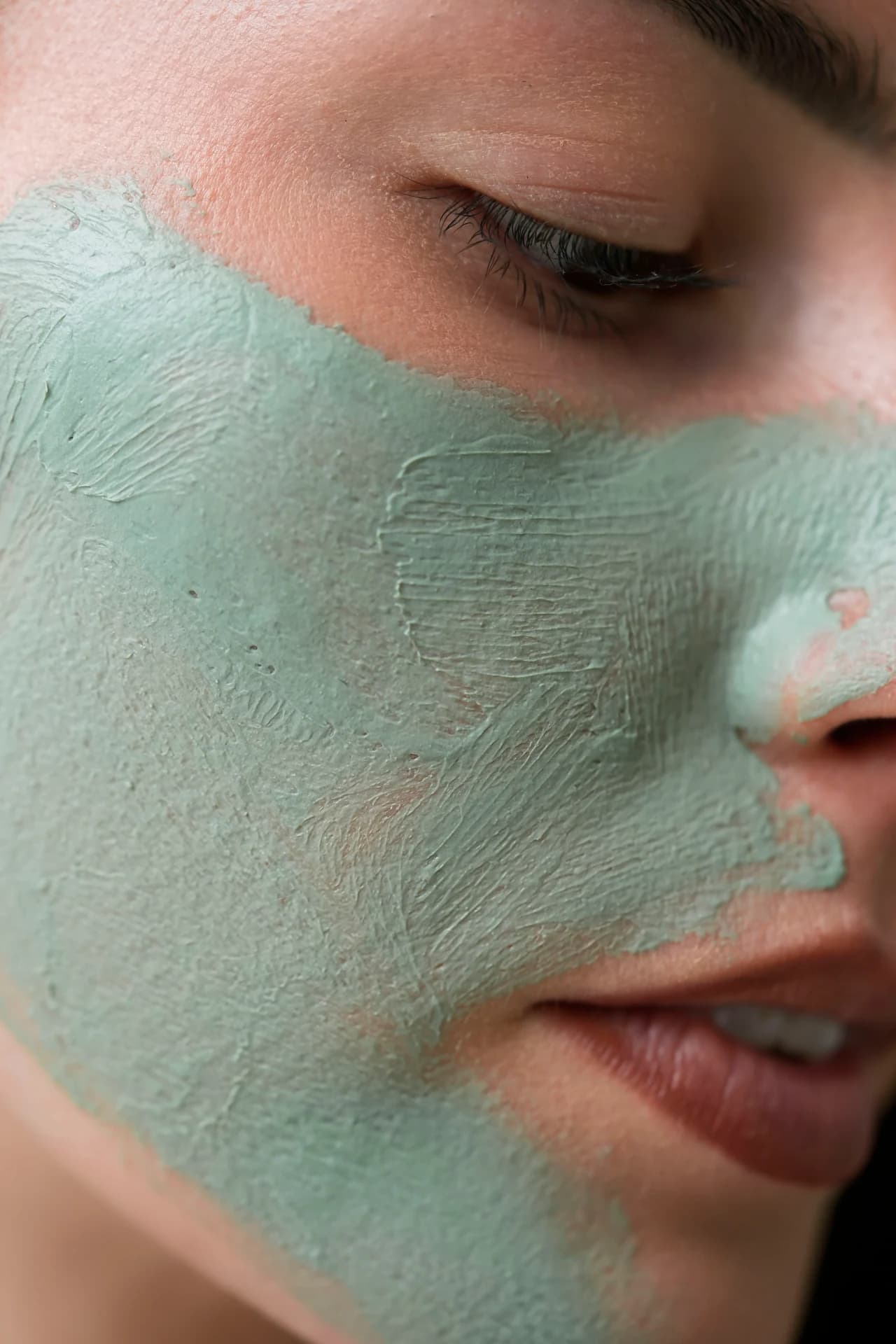
Clays are layered minerals with an enormous amount of surface area folded into a very small volume, and that surface carries a negative charge. Sebum has positively charged components. Put the two together and the oil migrates towards the clay and is held there, and that is the whole mechanism behind every clay mask ever sold.
What separates one clay from another is how strongly it does that. Bentonite forms from volcanic ash and has the strongest drawing power of the common cosmetic clays. It swells when it meets water and tightens as it dries, which is the sensation most people read as the mask working.
Strong is not automatically better. Bentonite can keep pulling past the point of usefulness and leave skin tight enough that it responds by producing more oil, which is the opposite of what anyone wanted. Kaolin is the gentler option, finer in texture and less aggressive, which is why it turns up in formulas built for dry or sensitive skin.
Zeolite comes from the same volcanic story but behaves differently again. A clay holds material against its surfaces more or less indiscriminately. A zeolite has a rigid internal framework with channels of a fixed width, roughly 0.4 to 0.7 nanometres in clinoptilolite, so size and charge decide what gets in. That is selectivity rather than raw capacity.
Which is why the two are often used together rather than treated as alternatives. Our own mask is formulated with both zeolite and bentonite, alongside activated charcoal and Centella.
On timing, twenty minutes is usually enough and longer is not better. A clay mask that has fully dried and started to crack has stopped adsorbing and has begun drawing water out of the skin instead, which is where the tight, uncomfortable finish comes from.
And there is no rule that a mask belongs only on the face. The neck, chest, hands and feet have the same problem and almost never get the same attention.